Confined Space Entry Supervisor Training Requirements (OSHA 1910 & 1926)
When it comes to confined space entry, few roles carry more responsibility than the Entry Supervisor. Under both 29 CFR 1910.146 for general industry and 29 CFR 1926 Subpart AA for construction, OSHA places clear expectations on employers to ensure that individuals designated as Entry Supervisors are properly trained and capable of performing their duties.
Understanding these requirements is essential, not just for compliance, but for preventing serious injuries and fatalities.
What Does an Entry Supervisor Do?
The duties of the Entry Supervisor are outlined in 1910.146(j) for general industry, and in the construction standard in 1926.1210. Although these two standards use slightly different wording, the core responsibilities remain consistent across both standards.
At a fundamental level, the Entry Supervisor is responsible for ensuring that confined space entry operations are safe, properly planned, and fully compliant before and during entry.
This begins with a thorough understanding of the hazards of the particular confined space to be entered and work to be performed.
Hazard Recognition and Communication
An Entry Supervisor must know the hazards that are present or could potentially be present within the confined space. These may include atmospheric hazards such as oxygen deficiency, toxic gases, or flammable vapors, as well as physical hazards like engulfment or hazardous mechanical energy.
Just as important, the Entry Supervisor must understand the signs and symptoms of overexposure to these hazards.
This information must be clearly communicated to designated entrants and attendants prior to entry. Effective communication at this stage is critical and often determines whether hazards are properly recognized once work begins.
Verifying Safe Conditions Before Entry
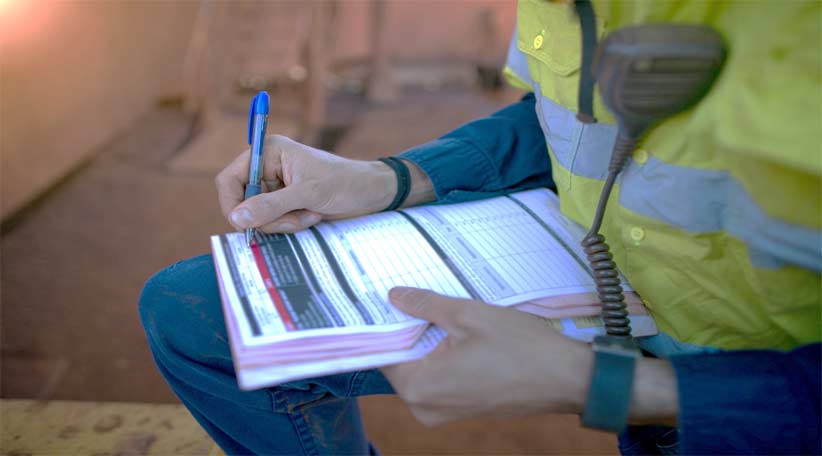
Before authorizing entry, the Entry Supervisor must verify that all conditions required by the permit have been met.
This includes ensuring that:
- All required atmospheric and other testing has been conducted
- Test results are properly documented on the permit
- Required procedures are in place
- Necessary equipment is available, functional, and properly used
Only after confirming these elements can the Entry Supervisor sign the permit and authorize entry into the confined space.
Ensuring Rescue and Emergency Preparedness
One of the most critical responsibilities of the Entry Supervisor is confirming that rescue and emergency services are available.
Before entry is authorized, the Entry Supervisor must verify that:
- Designated rescue services are available
- The means to summon emergency assistance are operable
If rescue services become unavailable at any point, the employer must be notified immediately, and entry operations must be reevaluated.
This is an area where OSHA frequently identifies deficiencies during inspections.
Controlling Access and Maintaining Safe Operations
During entry operations, the Entry Supervisor plays an active oversight role.
They must ensure that:
- Unauthorized individuals are immediately removed from the permit space
- Entry operations remain consistent with the conditions outlined on the permit
- Acceptable entry conditions are continuously maintained
At appropriate intervals—based on the hazards and work being performed—the Entry Supervisor must reassess the operation to confirm that conditions remain safe.
Terminating Entry Operations
The Entry Supervisor is also responsible for formally ending the entry operation.
This includes:
- Canceling the permit at the conclusion of work
- Terminating entry if a non-correctable hazard is identified
This authority is critical. If conditions become unsafe and cannot be corrected, entry must stop immediately.
OSHA Training Requirements for Entry Supervisors
OSHA does not specify a fixed number of training hours for Entry Supervisors. Instead, both standards require that employees receive training sufficient to acquire the understanding, knowledge, and skills necessary to perform their duties safely.
Effective Entry Supervisor training should include:
- Hazard identification and evaluation
- Atmospheric testing procedures and equipment
- Permit system requirements and documentation
- Roles and responsibilities of entrants, attendants, and supervisors
- Emergency procedures and rescue coordination
- Communication methods and protocols
Training must be provided:
- Before the employee is first assigned duties
- When job duties change
- When new hazards are introduced
- When there are indications that performance is inadequate
Common Questions About Entry Supervisors
Can an Entry Supervisor also be an entrant or attendant?
Yes. According to the footnotes for the OSHA definitions of “Entry Supervisor” in 1910.146 and 1926 Subpart AA, an individual may serve in multiple roles, including entry supervisor, provided they are properly trained, equipped, and capable of performing all assigned duties safely.
Can Entry Supervisor responsibilities be transferred during an operation?
Yes, responsibility can be transferred to another qualified individual.
However, the oncoming Entry Supervisor must verify that all conditions and protections specified on the permit are in place and effective. They must then sign the permit to formally assume responsibility for the operation.
Are the Competent Person and Entry Supervisor roles for confined space entry operations one and the same?
Under the construction confined space standard, 29 CFR 1926 Subpart AA, you will often see overlap between the roles of the competent person and the entry supervisor.
In many cases, especially on smaller job sites, the same individual may be designated to serve in both roles. When this happens, that person must be fully trained and capable of performing all responsibilities associated with each role.
However, it is important to understand that these are not automatically the same position.
The competent person is responsible for identifying existing and predictable hazards in the work environment and has the authority to take prompt corrective measures to eliminate those hazards.
The entry supervisor, on the other hand, is responsible for overseeing the confined space entry operation, verifying that all permit conditions are met, and authorizing entry.
On larger or more complex projects, these roles may be assigned to different individuals. When that is the case, clear communication and coordination between the competent person and the entry supervisor are essential to ensure that hazards are properly identified, evaluated, and controlled before and during entry.
Whether these roles are performed by one person or shared between multiple individuals, the key requirement remains the same: hazards must be identified, conditions must be verified as safe, and corrective actions must be taken without delay.
Common Mistakes Employers Make
Based on real-world observations, several issues appear repeatedly:
- Failing to properly verify rescue service availability
- Incomplete or improperly filled-out permits
- Inadequate hazard communication to workers
- Lack of periodic reassessment during entry operations
These are not minor issues; they are frequently cited by OSHA and can lead to serious consequences.
Final Thoughts
The Entry Supervisor is more than just a required designation; it is a critical safety control within any confined space program.
This individual serves as the final checkpoint before entry begins and as an ongoing authority throughout the operation. Proper training ensures that hazards are recognized, controls are verified, and unsafe conditions are addressed without hesitation.
Get OSHA-Compliant Entry Supervisor Training
Serving as an Entry Supervisor carries significant responsibility. Make sure you and your team are fully prepared.
Our online confined space training courses are designed to meet OSHA requirements under 29 CFR 1910.146 and 29 CFR 1926 Subpart AA, while providing practical, real-world guidance you can apply immediately.
Train on your schedule. Stay compliant. Keep your team safe.